

Our Cincinnati Dental Bridges
A missing tooth can affect much more than your smile. It can change the way you chew, speak, and even the overall shape of your face. At Seibert Complete Dentistry, we provide dental bridges in Cincinnati that restore balance, comfort, and confidence to your smile. Bridges are a natural-looking, affordable solution designed to fill the gaps left by missing teeth and prevent further oral health issues.
When you choose our Anderson Township dental office, you’re choosing a team that combines precision, artistry, and compassion. We create custom dental bridges that blend seamlessly with your natural teeth, helping you eat, speak, and smile with ease once again.
Dental Bridges in Anderson Township
Seibert Complete Dentistry offers dental bridges in Anderson Township for patients who need to replace one or more missing teeth. A dental bridge can fill a gap in your smile while helping restore chewing ability, speech, and the overall appearance of your teeth. We’ll evaluate your oral health and discuss whether a bridge is an appropriate tooth replacement option for you.
Dental Bridges in Cincinnati
If you’re looking for dental bridges in Cincinnati, Seibert Complete Dentistry provides personalized restorative dental care from our Anderson Township office. A custom dental bridge is designed to blend with your surrounding teeth and provide a stable way to replace missing teeth. Depending on your situation, we can also help you understand how a bridge compares with other options, including dental implants.
Ready to Replace a Missing Tooth?
A missing tooth can affect more than your smile. Contact Seibert Complete Dentistry to discuss your tooth replacement options and determine whether a dental bridge is right for you.

Why Choose Seibert
As a trusted Cincinnati family dentist, we believe your smile care should go beyond just teeth, it should focus on your comfort, confidence, and long-term oral health. At Seibert Complete Dentistry, you’ll receive care from a team that knows you, understands your goals, and uses proven techniques to deliver results you’ll love. With us, you’re never just another patient, you’re part of our dental family.
Why Dental bridges Matter
Missing teeth can cause more than cosmetic concerns. They can lead to shifting teeth, bite problems, and jaw discomfort over time. A dental bridge fills the gap by anchoring a replacement tooth to your surrounding natural teeth, restoring stability to your bite and preventing further complications. Beyond function, bridges also help you feel confident again, giving you back a complete and healthy smile.
Benefits of Dental Bridges
Dental bridges are a reliable solution for restoring your smile after tooth loss. They improve both your oral health and your confidence while offering lasting comfort and support.
-
Restores your ability to chew and speak naturally
-
Prevents surrounding teeth from shifting out of place
-
Maintains proper facial structure and jaw alignment
-
Provides a natural, seamless look
-
Durable and long-lasting with proper care
-
More affordable than dental implants
-
Can replace one or multiple missing teeth
-
Boosts confidence by giving you back a complete smile
FAQ
Frequently Asked Questions
What is a dental bridge?
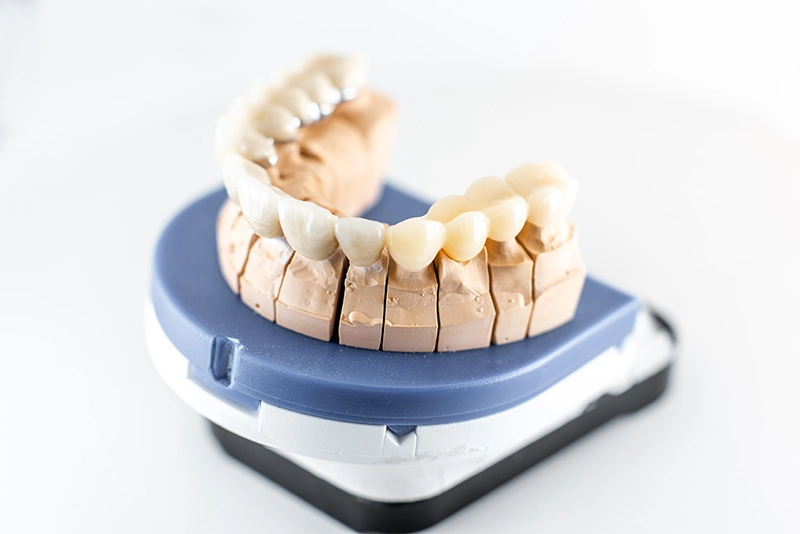
A dental bridge is a fixed tooth replacement used to replace one or more missing teeth. A bridge typically consists of one or more artificial teeth, called pontics, supported by crowns placed on neighboring teeth. The result fills the gap and restores the appearance and function of your smile.
Who is a good candidate for a dental bridge?
A dental bridge may be a good option for patients who are missing one or more teeth and have healthy, strong teeth or dental restorations available to support the bridge. Your dentist will evaluate your teeth, gums, bite, and overall oral health to determine whether a bridge is the right tooth replacement option for you.
How long do dental bridges last?
With good oral hygiene and regular dental care, a dental bridge can often last 10–15 years or longer. Its lifespan depends on the type of bridge, the health of the supporting teeth and gums, your bite, and how well you care for your restoration.
Do dental bridges look natural?
Yes. Dental bridges are custom-designed to match the size, shape, and color of your surrounding teeth. Modern dental materials allow bridges to blend naturally with your smile while restoring the appearance of missing teeth.
Is getting a dental bridge painful?
Getting a dental bridge is generally comfortable. Local anesthesia is used when the supporting teeth need to be prepared, so you should not feel the procedure. Some mild sensitivity or soreness may occur afterward as your mouth adjusts to the restoration.
What is the difference between a dental bridge and a dental implant?
A dental bridge replaces a missing tooth by using neighboring teeth for support, while a dental implant replaces the tooth root and supports a restoration directly from the jawbone. Bridges can often be completed more quickly and without implant surgery, while implants provide a standalone tooth replacement that does not rely on neighboring teeth. Your dentist can help determine which option best fits your oral health and goals.
How do I know whether a bridge, implant, or partial denture is right for me?
The best tooth replacement option depends on the number and location of missing teeth, the health of your neighboring teeth and gums, your jawbone, your bite, and your overall treatment goals. A dental consultation allows your dentist to evaluate these factors and recommend the option that provides the best combination of function, appearance, comfort, and longevity.
Can a dental bridge replace more than one missing tooth?
Yes. Depending on the location of the missing teeth and the strength of the surrounding teeth, a dental bridge can replace multiple adjacent missing teeth. During your examination, we'll evaluate whether a bridge or another tooth replacement option would provide the best long-term result.
What types of dental bridges are available?
Several types of dental bridges are available, including traditional fixed bridges, cantilever bridges, Maryland bridges, and implant-supported bridges. The appropriate type depends on the location of the missing tooth or teeth, the condition of the surrounding teeth, and your overall oral health.
Can a dental bridge prevent my other teeth from shifting?
Yes. Replacing a missing tooth can help maintain the position of the surrounding teeth. When a tooth is lost, neighboring teeth can gradually shift into the empty space, potentially affecting your bite and making cleaning more difficult. A dental bridge helps fill that space and maintain a more stable bite.
What happens if I don't replace a missing tooth?
Leaving a missing tooth untreated can affect more than the appearance of your smile. Over time, neighboring teeth may shift, your bite can change, and chewing may become more difficult. Depending on the location of the missing tooth, bone loss can also occur in the area. Replacing the tooth can help restore function and maintain a healthier, more balanced smile.
Can a dental bridge restore my ability to chew?
Yes. A dental bridge is designed to restore much of the function of a missing tooth or teeth, making it easier to chew and speak comfortably. Once you adjust to your new bridge, it should function similarly to your natural teeth.
How do I care for a dental bridge?
Care for your bridge much like you care for your natural teeth. Brush twice daily, clean carefully around the supporting teeth, and use floss or another recommended tool to clean underneath the artificial tooth or teeth. Regular dental exams and professional cleanings are also important for maintaining the health of your bridge and supporting teeth.
Can I eat normally with a dental bridge?
Once you have adjusted to your new bridge, you should be able to eat most foods normally. It's best to follow your dentist's instructions immediately after placement and avoid excessively hard or sticky foods that could damage the restoration.